Thursday, April 13, 2017

Nature therapy revisited

photo credit: Anna Krawczyk
We might not need one more book or article to convince us of the restorative benefits of nature for both our physical and mental health.  We already know that's true.  However, we might need to see the research now and again as a necessary reminder to do what we should be doing: get some nature!  I know I need the reminder.

This recent article posted on Facebook caught my attention:  The Original Natural Remedy for Burnout: Nature.  The article cites a recent study with this interesting but perhaps not surprising statistic:
"People report that they feel significantly happier outdoors than they do indoors, yet we spend less than 5 percent of our waking hours in nature."
The article cites research to back up many of the stress and anxiety-relieving benefits of spending time in nature.  The author also writes about studies done on nature's impact on creativity and the ability to think more clearly.  I definitely have experienced those benefits in my own life.  If you're interested in learning more about the research or you just need a good reminder to spend more time in nature, take a few minutes to read this article.  I like the fact that the author gives some concrete suggestions of how we can make a more intentional effort to spend time in nature.       

If you've read my blog at all, you know that I often write about nature and reflect on its therapeutic effects.  So if you need inspiration or want to immerse yourself in nature on a day when you're stuck inside, I've linked some of my nature-themed posts below.  These posts also show that spending time in nature doesn't have to mean a trip to a State or National Park, as wonderful and beneficial as those trips can be.  Most of us can find beautiful and restorative natural places closer to home. 

I hope you'll spend some time in nature this holiday weekend!

*****

cell phone/nature poem for the first day of spring

in-between

I hug the trees too.

"Prettyish kind of a little wilderness" - in the city

Nature therapy

Wednesday, April 12, 2017

Yes, you do like poetry.


It's almost mid-April, but it's not too late to celebrate National Poetry Month.  The Academy of American Poets founded National Poetry Month in April 1996.  On the website for National Poetry Month 2017, you can sign up to receive a poem-a-day and find other ways to appreciate poetry this month and beyond. 

And yes, you do like poetry.  I used to be a person who thought I didn't perhaps like poetry.  I didn't not like it, but maybe I thought it wasn't quite for me.  People - myself included - sometimes think poetry isn't for us, because we have stereotypical or limited views of the genre.  Poetry is not just Shakespearean sonnets (which are lovely) or ancient epics or indecipherable abstractions or cutesy-sentimental rhymes.  Poetry encompasses those things and so very much more.  If you appreciate song lyrics or are moved by a particular prayer or have laughed at a limerick, you like poetry.     

Sharing poetry with children, as a classroom teacher and as a homeschool mom, has made me appreciate the genre more.  It helped open my eyes to the diverse forms that a poem can take.  If you have children or work with children, by all means please read poetry to them!  There are so many delightful collections specifically for children and don't underestimate their ability to appreciate more complicated poems as well.  Memorizing a short poem together can be a fun challenge.  

Some of the more formulaic types of poetry are especially appropriate (and lots of fun) when having children try writing their own poetry.  Kids really like writing cinquain poems, acrostic poems, haiku, limericks and list poems.  I've enjoyed trying some of those forms as well.  Early on in writing this blog, I did a thirty day blog challenge.  Many of my posts were short and silly poems that I composed to meet my daily goal.  Recently, many of the stories I want to tell or ideas I want to share have come out in the form of poems. 

I really have come to appreciate poetry, as a reader and as a writer.  And I hope you do too.  Please read and share some poetry before the end of the month.  Feel free to comment and share your favorite poems or poets here.   

I'll close with a side-by-side presentation of two poems that I shared in a poetry unit I taught.  And, for a completely different take on poetry, I highly recommend the documentary Louder Than a Bomb about a high school poetry slam contest in Chicago.  It's a very powerful film. 

Tuesday, April 11, 2017

aging at the roller-rink & other observations


1.  At the roller-skating rink far in the suburbs, a middle-aged man is skating alone among the families, tweens and teens.  He's balding with a long, thin ponytail and a t-shirt tucked into purple-washed Guess jeans.  (They still make those?)  He skates fancy moves around the rink - spinning and turning and gliding backwards. 

2.  At the art museum downtown, an elderly women has a friend take a photo of her in front of a painting.  A security guard rushes over and tells them to turn off the flash.  The elderly woman's face is caked heavily with make-up.  She's dressed in a fancy hat, skirt and blouse.  She struggles to walk, shuffling herself along behind a wheelchair wearing very high-heeled pumps.

3.  At school, a little boy called me "old lady," and a middle-schooler called me "granny."

4.  I don't think I look like a granny.  But what does a granny look like anyway?

5.  I'll gladly slip on a pair of roller-skates and glide around the rink.  But I won't be returning to the
fashions of the 1980s or to the awkwardness of my adolescence.  I already suffered through those fashions and that age.  Once was enough.

6.  I hope I'll be appreciating art at the museum thirty or more years from now, maybe shuffling along with a walker or wheelchair.  I definitely won't be wearing make-up or high heels, because I don't even wear them now.  I'm far too lazy and fond of comfort for all of that.

7.  I am glad to be forty-eight years old and alive in this very interesting world full of very interesting people.

Monday, April 10, 2017

Two sides of the fence


on one side of the fence
there is a stone bench
and community gardens
a pile of mulch
being surmounted
by small children
who are white.
they wear colorful rain boots
and lands end jackets.
they take nature walks
with their caregivers
and sing songs
about the seasons.
(or so i imagine)

on the other side
is a basketball court
the wind has blown
dead leaves & wrappers
along the edges.
there is a playground
and a tot lot too.
the kids who play here
are mostly brown and black
and not much older.
they shoot hoops,
chase each other,
race and skip rope,
sometimes fight a lot
using words incompatible
with their young selves.

a small girl follows me
around, huddles up
and takes my hand in hers.
or a small boy asks me
to tie his shoes and
zip his jacket.

sometimes children
from both sides
talk to each other
across the fence.
i like that.
they seem
not so separate
then.

*****

I wrote a version of this over a month ago and have tinkered with it a few times since.  I'm not quite satisfied with the piece yet.  It's an observation of a real place.  Perhaps this small scene is a sort of microcosm of the larger problem of segregation in Milwaukee.   

Sunday, April 9, 2017

the labyrinth


sunlight streams
in on polished
warm wooden floors
and through the
intricate, jewel-toned
stained glass windows
geometric and
floral in pattern

i walk slowly
through the
labyrinth
speaking in
my mind of
questions, prayers
whether they are
memorized, read
or spontaneous
i remind myself
to breathe deeply

i notice patterns
and scratches
in the floor
a wooden cross
with a beautifully
painted image
candles lit
throughout the sanctuary
billowy white banners
hang from the
ceiling and form
a canopy of sorts
sacred chanting
is played from
somewhere

my mind wanders
nevertheless
so very many
things to do
or worry about
but I continue
to walk slowly
to notice
my footsteps
the path and patterns
the peace and beauty
return me to
contemplating
listening
and listening
for the quiet
voice

at the center
i kneel and pause
breathe deeply
say my own
kind of prayer
i rise and leave
more peaceful
more rested
maybe a bit wiser
just for now
than when
i entered

*****

Have you ever walked a labyrinth?
"Labyrinths are used worldwide to quiet the mind and to seek balance, peace, and discernment.  Offering a tranquil refuge from a fast-paced world, they provide the space to pursue a cross-cultural practice of centering and contemplation, which has long been embraced by Christians and non-Christians alike."  (quoted on handout from Calvary Presbyterian Church)
I've walked a few different labyrinths, both indoor and outdoor.  Today my son and I visited an indoor labyrinth at The Big Red Church.  For Milwaukee people, this is the red church on Wisconsin Avenue near Marquette University.  It's home to Calvary Presbyterian Church and is used by other organizations as well.  Labyrinths can be a wonderful method of contemplation, meditation or prayer for all people, regardless of spiritual or religious beliefs.

This labyrinth at The Big Red Church is open to the public on the 2nd and 4th Sundays of each month from 4:30-6:00pm.  Check out http://www.thebigredchurch.com/labyrinth for more information.  The church offered a variety of poems, prayers and reflections to accompany the labyrinth.  I particularly enjoyed this poem by Wendell Berry.

 
The Real Work
by Wendell Berry
 
It may be that when we no longer know what to do
we have come to our real work,
 
and that when we no longer know which way to go
we have come to our real journey.
 
The mind that is not baffled is not employed.
 
The impeded stream is the one that sings. 

Monday, March 20, 2017

cell phone/nature poem for the first day of spring

prologue
 
after work
i'm inclined to sit
or even nap
but i cannot resist
this beautiful afternoon
the first day of spring
 
*****
 
cell phone/nature poem for the first day of spring
 
walking down the hill
through the forest
toward the river
mid-march and
i'm mesmerized by
everything-is-brown
mud beneath my feet
decaying oak leaves
intertwining branches
of standing and fallen
trees and shrubs
the greenish-brown
flow of the river
all browns against the
bright blue sky


i default to
the-modern-trap
taking photographs
i stop and consider
my willingness
to let technology
intrude on my walk
to look at things
through a phone/camera
 
but I want to
remember the
seemingly stoic seagull
being pulled nonchalantly
by the swift river current
she does not seem to mind
 
so i start
tapping out
notes & phrases
on my phone
it is a contradiction
i am aware
of contradictions
i am full of them
 
but still
 
what i hear is…
crows caw-caw-cawing
trees creaking as
they bend with the wind
the unmistakable sound
of a woodpecker
the bark of a dog
from somewhere above

i leave the main path
drawing closer to
the soothing sound
of the river flowing and
bubbling briskly
over large stones


i stand among
dried out grasses
cool hands
breeze on my cheeks
hair blowing
i look around me
and across the river
i am alone
i sit down and just
listen to the water
close my eyes
in the wild beauty
of this wonderful
and ordinary place
when i stand up
and turn to walk
back to the main path
i am surprised to see a
young man fishing
on the same side
of the river
and not too far away
 
returning to the path
there is a makeshift
walkway boardwalk
covering muddy areas
my fluorescent-hued
running shoes
discordant on the planks
another contradiction
my colorful feet
squishing in the muddy path
crunching on dead leaves or
wood chips or gravel paths
 
as i finish my walk
i spot across the river
a possible kindred spirit
she stands still
watching the river
 
i walk up to
the park above where
people walk dogs
young men occupy
the basketball courts
a couple of families
enjoy the playground
 
i am grateful
for the gifts of
the sunshine and the warmth
the beauty and the life
of this afternoon
the first day of spring
 
*****
 
epilogue
 
I’ve been feeling a bit sorry for myself lately (and envious) as I hear about people’s warm weather or exotic or exciting vacations.  When I start feeling sorry for myself, it's always a sign that I’ve not been appreciating enough the ordinary gifts of life and, in fact, the gift of life itself. 
 
An article my cousin sent me yesterday (thanks, Lori) was a good reminder and inspired this post as well.  See that article here: How to Live life with Fantastic Aliveness:Remembering Amy Krouse Rosenthal. 

Thursday, February 2, 2017

January reading notes - got privilege?

Two of the books that I read this past month had me thinking about privilege.  I have many privileges in my life.  I'm not saying any of these privileges are superior qualities.  Being born white and in the U.S. does not in any way make me better.  I'm also not saying that because of my privileges I have accomplished more.  Far from it!  People with fewer privileges have achieved much more.  Yet having these privileges has made my life easier in many ways.

Here are some of my privileges:
I am white.
I was born in the United States of America.
I was born healthy and have always had access to healthcare.
I grew up in a safe and cohesive neighborhood.
I had access to and attended good K-12 schools.
I graduated from college with a Bachelor's degree and a manageable amount of debt.
I grew up in a stable middle class family with two loving parents.
Through their strong example, my parents taught us to value: family, faith, education, community, hard work, civic and political engagement, service and volunteerism. 

All of those privileges or values I received by the fortune of my birth.  I recognize my privileges and am grateful for the values I was taught by my parents.  I also know that life is not a level playing field, and that many people start out with fewer privileges or none at all.  It doesn't take anything away from me to admit my white privilege or that I have a good work ethic due to my parents' example.  I don't feel that demeans me in anyway, so I don't understand why the idea of privilege is so controversial.  In my opinion, we need to recognize privilege in order to work toward overcoming many of the injustices in our society and our world. 


Evicted: Poverty and Profit in the American City by Matthew Desmond

I highly recommend this book to everyone I know.  It's the type of nonfiction that reads almost like a novel due to the compelling stories of the people portrayed and the author's process and excellent storytelling.  Matthew Desmond lived among the people he wrote about - both in a trailer park on the south side of Milwaukee and in an apartment on the north side.  I never realized how bad the housing situation is for Milwaukee's low income families.  People are spending more than half their income on housing and much of the "affordable housing" is run-down and dilapidated.  People have little recourse as complaints or questions to their landlords more often lead to eviction than to resolving the problem.  The people and families portrayed here have few of the privileges that I listed above for myself.  And at every turn, they are met with more roadblocks and challenges.  Desmond explains how eviction used to be a rare phenomenon in our country, and how it has now almost grown into an industry.  And he shows the ripple effect of all those evictions.  Just a few examples: kids change schools so often they fall far behind academically; frequent turnover in rental properties results in the lack of relationships and bonds that create strong neighborhoods; mothers who are struggling to keep their families from being homeless become despondent and depressed. 

The cyclical nature of poverty is very evident.  It will make you mad and sad to read this book.  Desmond offers some hopeful stories and ideas of how housing programs could be structured differently.  He also explains his fieldwork process at the end of the book, and it's pretty fascinating to read about it.  There is a website connected to Desmond's book that gives more information about the eviction crisis and resources to help.  You can find that at justshelter.org.  We cannot do embedded fieldwork like Matthew Desmond.  But how can we better accompany and advocate for those on the margins?  Whether that's through service work or dialogue or political engagement - it's a very important question.


Small Great Things by Jodi Picoult

Jodi Picoult is a prolific author known for writing books on a variety of social issues or current topics.  Her novels typically follow a formula with characters on two sides of an issue, a courtroom drama and a dramatic plot twist.  Small Great Things is a book about race and privilege.  It's a page-turner and a good novel.  The plot centers on a black labor and delivery nurse who is prohibited from caring for the newborn of a couple who are white supremacists, and what happens when the baby dies not longer after birth.  The book is told from the point of view of the nurse, her white lawyer and the skinhead dad.  The characters are interesting and the courtroom drama is compelling.  Of course, there is the question of whether the author - a white woman - can treat the subject adequately or fairly.  I think she does a pretty good job.  Her author's note explains her process and research.  I read a variety of reviews, and I found this one by Roxane Gay in the New York Times to be a fair assessment - the good and the bad - of how Picoult tackles the issue of race.   

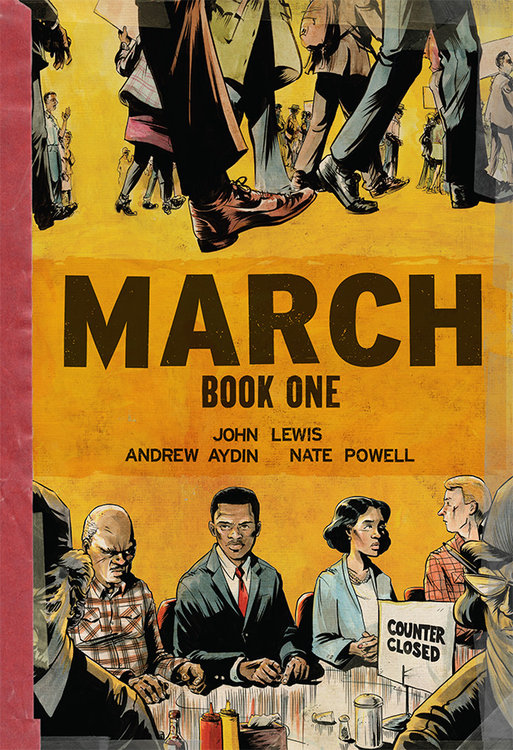
For my own part, I would say - go ahead and read this novel about race.  And then also read books written by people of color.  Authors write from all sorts of experiences and identities outside of themselves - from the point of view of a different gender or time period or nationality or race.  But I firmly believe that if we want to learn more about the experience of black people, we should read books written by black people.  A few books I've read fairly recently and recommend: March (graphic novels) by John Lewis, The Underground Railroad by Colson Whitehead, Between the World and Me by Ta-Nehisi Coates and Americanah by Chimamanda Ngozi Adichie.  This year I'm planning to read books by Roxane Gay and Zadie Smith, two authors I've been wanting to read for a while.

*****

Also read in January:
Mockingbird by Kathryn Erskine
The Hound of the Baskervilles by Sir Arthur Conan Doyle


In progress or up next:


March Trilogy (graphics novels) by John Lewis, Andrew Aydin and Nate Powell (see more info here: http://www.topshelfcomix.com/march)
The Absolutely True Diary of a Part-Time Indian by Sherman Alexie

What have you been reading?